The conflict between BBQ Smoking Times and internal temperatures is the most common hurdle for amateur cooks. Many recipes suggest “smoke for 8 hours,” but in the world of professional BBQ, time is merely a logistical window. Internal temperature is the only metric that guarantees food safety and succulent texture. Our BBQ Smoker Time Calculator treats time as the “when” and temperature as the “is it done?”
The Science of Doneness vs. Tenderness
Safety and texture are two different targets. For example, poultry is safe at 165°F (74°C). However, a beef brisket is technically “safe” to eat at 145°F (63°C), yet at that temperature, it remains completely inedible and tough as a boot.
Brisket and pork shoulder require a specific internal temperature—usually around 203°F (95°C)—to trigger the breakdown of collagen into gelatin. This process is not instantaneous. It requires a specific thermal threshold maintained over a period of time. Therefore, BBQ Smoking Times must be long enough to allow this chemical transformation to occur, regardless of what the clock says. If you hit 203°F in two hours using high heat, the collagen won’t have had time to render, and the meat will be rubbery.
Why the Clock Often Fails the Pitmaster
Several external variables render a strict timer useless in a backyard setting. If you rely solely on a watch, you are ignoring the physics of your environment.
1. Ambient Humidity and Evaporative Cooling
In the UK, humidity levels fluctuate wildly. High humidity slows down evaporation from the meat’s surface. While this might seem like it would keep meat moist, it actually prolongs the “stall”—the period where the meat’s internal temperature plateaus. A 10-hour estimate on a dry day could easily become a 13-hour cook on a damp, foggy morning in Norfolk.
2. Airflow and Convection
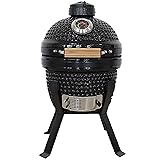
Not all smokers are created equal. A high-airflow offset smoker acts like a convection oven, pushing heat across the meat rapidly. A ceramic Kamado, while excellent at retaining heat, often has less airflow. The same cut of meat will have different BBQ Smoking Times depending on the vessel. The internal temperature probe is the only constant across these different platforms.
3. Meat Grade and Intramuscular Fat
A Wagyu brisket with high marbling conducts heat differently than a lean Select-grade cut. Fat acts as an insulator initially but eventually renders and helps distribute heat. The thickness of the fat cap also dictates how fast the thermal center of the meat rises.
The “Stall”: Where Time Stands Still
Between 155°F and 170°F (68°C–77°C), meat undergoes the “stall.” This is the point where the rate of evaporation from the meat’s surface matches the heat input of the smoker. For a beginner, this is terrifying. The clock keeps ticking, but the internal temperature does not move for hours.
If you trust the clock, you might think your smoker has gone out. If you trust the temperature, you know the meat is simply “sweating.” A BBQ Smoking Time Calculator helps you predict the duration of this stall so you don’t panic and ruin the bark by cranking up the heat prematurely.
When Time Actually Matters: The Logistical Manager
If internal temperature is the king of quality, time is the king of logistics. You cannot run a successful BBQ without a plan. This is where the BBQ Smoker Time Calculator becomes indispensable.
Scheduling the “Rest”
One of the most overlooked aspects of BBQ is the resting period. A brisket needs at least two hours in a “Faux Cambro” (an insulated cooler) to allow the juices to redistribute. If you want to serve dinner at 7:00 PM, you need the internal temperature to hit its target by 5:00 PM.
Working Backward:
- Goal: 7:00 PM Dinner.
- Resting: 2 Hours (Finish cooking by 5:00 PM).
- Cook Time: 10 Hours (Estimated by calculator).
- Start Time: 7:00 AM.
The Professional Toolset
To bridge the gap between time and temperature, you need professional-grade monitoring. Do not rely on the “dial” thermometer built into your smoker’s lid. These are famously inaccurate, often off by as much as 50°F (10°C).
Amazon UK Recommendations:
- For Monitoring: The ThermoPro TP19H Digital Meat Thermometer is essential for spot-checking tenderness.
- For Long Cooks: Use the Meater Plus to track both the ambient smoker temp and the internal meat temp simultaneously.
Final Verdict: The Hybrid Approach
The most successful pitmasters use a hybrid approach. They use a Smoker Calculator to establish their start time and “window of completion.” Once the meat reaches the final 20% of the estimated time, they switch focus entirely to internal temperature and “probe tenderness”—the feeling of a thermometer sliding into the meat like it’s softened butter.