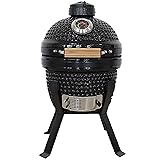
Avoiding Mistakes When Timing Your BBQ is what separates a backyard hobbyist from a certified pitmaster. Precision planning is your best defense against “hangry” guests and dry, overcooked brisket. While a BBQ Smoker Time Calculator provides the crucial roadmap, human error—often born from impatience or panic—is always lurking, ready to turn a 12-hour culinary journey into a stressful failure.
BBQ isn’t just about the recipe or the wood choice; it is, fundamentally, about temporal management. You must control the timeline, or the timeline will control you. Below are the five most critical timing mistakes that pitmasters must learn to avoid to ensure consistent, competition-quality results.
1. Underestimating (or Skipping) the Mandatory “Rest” Phase
The most pervasive and damaging mistake is assuming the cook ends when the meat leaves the smoker. Large, tough cuts like brisket or pork shoulder require a significant period of resting after they hit their target internal temperature. This phase is not passive; it is an active continuation of the culinary process.
The Physics of Resting
When meat cooks at high heat (even “low and slow” heat), its muscle fibers contract, forcing internal moisture toward the surface. If you slice it immediately upon removal from the grate, those high-pressure juices spill out onto the cutting board, resulting in dry meat that looks wonderful but tastes tough.
A proper rest allows the muscle fibers to relax and reabsorb that moisture, while the rendering process continues (carryover cooking) to soften any final connective tissues. For a large brisket, this rest should be a minimum of one hour, but two to four hours is optimal.
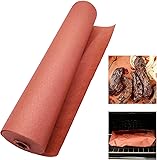
The “Faux Cambro” Technique: Wrap the finished meat tightly in peach butcher paper or heavy-duty foil, then encase it in a thick towel. Place it inside a pre-warmed, high-quality insulated cooler. This holds the temperature safely above 140°F (60°C) for hours, allowing you to timing the meal perfectly without rushing the crucial rest.
2. “Lid Peeking” and the Hidden Time Tax
There is an old, unbreakable BBQ adage: “If you’re lookin’, you ain’t cookin’.” Beginners struggle with this, often because they are eager to check the bark formation or are simply nervous. However, “lid peeking” is one of the most severe logistical Mistakes When Timing Your BBQ.
Every single time you lift the lid of your smoker, you instantly release the carefully managed convection environment. You lose the pressurized heat, moisture, and, crucially, the specific air circulation required for the “smoke ring” and the bark to form properly.
Quantifying the Cost
[Image illustrating heat loss diagram when smoker lid is opened]
The thermal loss is immediate. A quick 30-second peek can drop the ambient temperature of a smoker chamber by 50°F (10°C) or more. Depending on the type of smoker (especially thin-walled offsets), the recovery time to get back to the initial temperature can be 15–20 minutes. If you lift the lid just once per hour during a 12-hour brisket cook, you have just added four full hours to your cook time. Trust your wireless probes and your Smoker Calculator‘s initial estimates; the only time the lid should open is to wrap the meat or apply a necessary glaze.
3. Miscalculating Ambient Weather Effects on the UK Climate
A Smoker Calculator uses historical averages based on standard conditions, but it cannot know the specific weather conditions outside your back door on cook day. The ambient temperature, wind, and even humidity of your environment can fundamentally alter how your smoker performs, invalidating a generic estimate.
Weather Hazards in the UK
- Wind (Forced Convection): Wind is the pitmaster’s greatest enemy. It relentlessly strips heat from the surface of your smoker chamber through forced convection. This forces your fire to burn much hotter and faster just to maintain the target temperature, invalidating fuel consumption estimates. A consistent, strong breeze can easily extend a cook by 20% or more.
- Cold Air Contrast: In the UK, smoking a pork shoulder on a damp 5°C (41°F) evening is a different technological challenge than smoking one on a sunny 20°C (68°F) afternoon. Cold air increases the thermal contrast between the chamber and the environment, demanding significantly more thermal mass management.
- Insulation Strategy: If you regularly cook in cold or windy weather, invest in a smoker insulation blanket or create a windbreak. This stabilizes your temperatures and keeps your timing aligned with the calculator’s initial predictions.
4. Trusting the Catastrophically Inaccurate Dome Thermometer
Most smokers, especially entry-level and intermediate models, feature a beautiful analog thermometer built directly into the lid or dome. Beginners often rely on this as their primary data point for regulating their fire and following the timing roadmap. This is a critical error.
These thermometers are notoriously inaccurate. First, they measure the temperature at the top of the smoker (the dome), which can be 20°F to 50°F (10°C–25°C) higher than the temperature at the grate where your meat is actually sitting. Second, they are prone to significant calibration drift over time.
If your dome thermometer reads 250°F, you might think you are “low and slow,” but your meat is actually sitting in stagnant, cold 200°F air. This recognized but unaddressed discrepancy will cause your meat to cook much slower than predicted, adding hours to your timeline and potentially preventing the collagen from ever fully rendering, resulting in tough meat.
The Fix: Always use a calibrated digital probe placed directly on the grate, positioned an inch away from the meat (the Inkbird IBBQ-4T is an excellent WiFi option on Amazon.co.uk for monitoring errors from your phone).
5. Chasing the Temperature Spike and Panicking During “The Stall”
The “stall” is a fascinating thermodynamic plateau where, after hours of cooking, the internal temperature of the meat (usually around 160°F or 71°C) completely stops rising, often for two to four hours. This occurs because the rate of moisture evaporation from the meat’s surface exactly matches the heat input of the smoker, creating a natural cooling effect.
Chaos Theory: Temperature Chasing
The primary timing mistake here is panic. Amateur pitmasters see their calculated finish time approaching, but the internal temperature probe isn’t moving. They fear their fire has died or their meat is broken, and in a panic, they drastically open the vents or add massive amounts of fuel.
Sudden, major temperature adjustments are chaotic. They result in “temperature chasing,” where you overshoot your target grate temp (burning the rub), then restrict the airflow too much and starve the fire (producing acrid “dirty” smoke). This results in poor-quality smoke, acrid flavor, and unpredictable cook times. Instead, use your Smoker Time Calculator to anticipate the stall and prepare to apply the “Texas Crutch”—wrapping the meat in butcher paper or foil—to power through the evaporative cooling phase smoothly and maintain control.