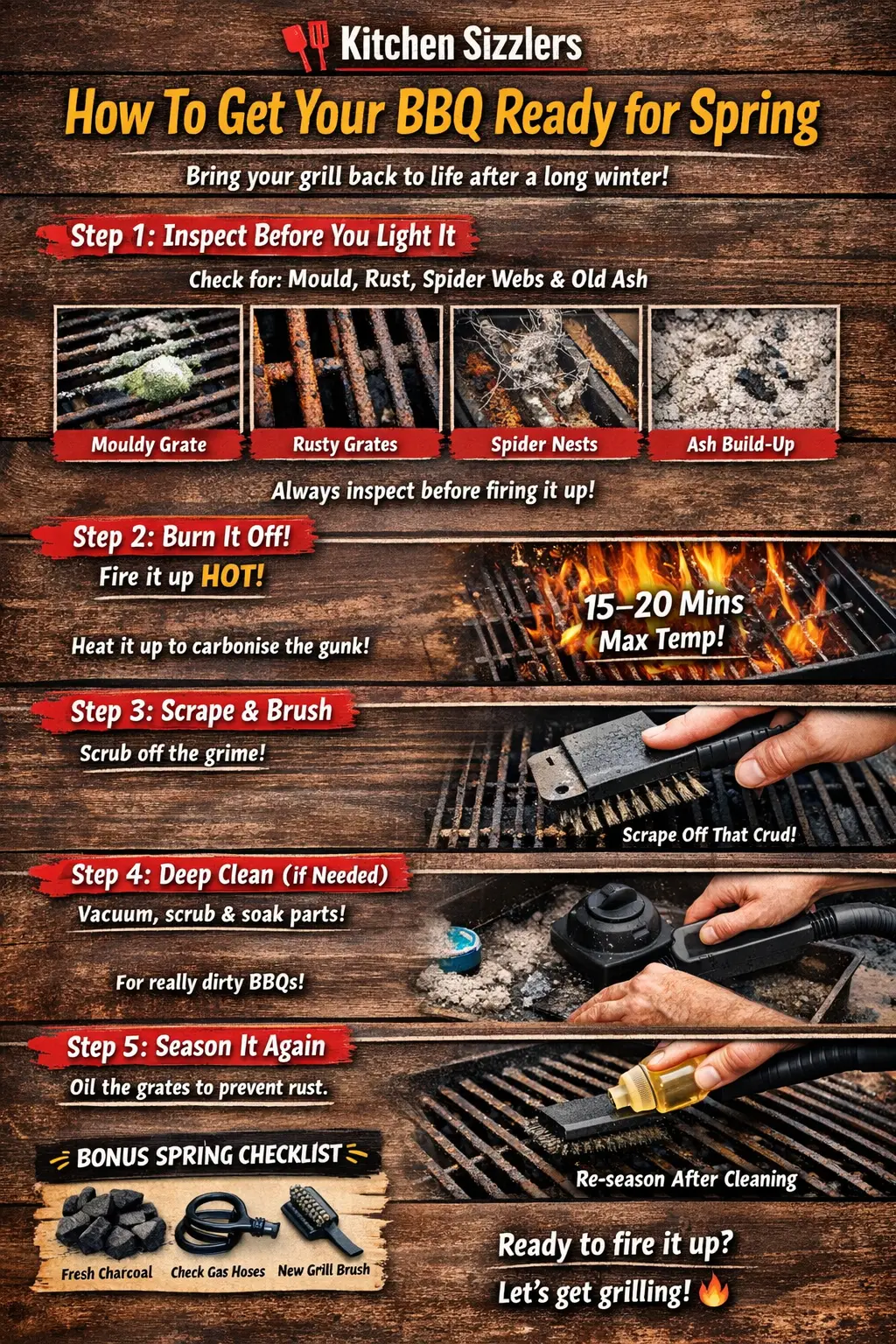
Knowing how to clean your mouldy BBQ safely using the high-heat BBQ burn off method is essential after a damp British winter. If you have opened your grill lid to find white or green fuzz on the grates, do not panic—you can easily clean your mouldy BBQ in under 45 minutes without harsh chemicals and get straight back to cooking.
Why BBQs Go Mouldy in the UK (Mouldy BBQ UK Guide)
The UK climate is a perfect storm for mould inside kettle grills, offset smokers, and gas BBQs. Between autumn and spring, British gardens deal with relentless dampness, condensation trapped under waterproof covers, and restricted airflow:
- High UK humidity and rain: Moisture gets trapped inside the cook chamber during winter storage.
- Leftover grease and food proteins: Cold fat and marinade residue on grates feed mould spores.
- Covered grills with zero airflow: Tightly sealed PVC covers trap ground moisture like a greenhouse.
- Leftover charcoal ash: Wood and briquette ash absorbs moisture from the air, which accelerates mould growth and causes acidic rust inside your firebox.
Is It Safe To Cook On a Mouldy BBQ?
Short answer: not until it is properly cleaned and sanitised with high heat. However, you do not need to throw away your grill or spray toxic bleach over your cooking grates.
Once you clean your mouldy BBQ using a high-temperature burn-off, all mould spores and bacteria are completely destroyed. Mould spores die at temperatures well below normal BBQ cooking temps (typically above 60°C–70°C), whereas a proper burn-off pushes your chamber past 250°C–300°C. In accordance with UK Food Standards Agency (FSA) hygiene standards, combining thorough physical scraping with high-heat sanitisation ensures your cooking surfaces are completely safe before food ever touches the grates.
Step-by-Step: How to Clean Your Mouldy BBQ in the UK
Follow this proven 4-step pitmaster method to clean your mouldy BBQ safely without damaging porcelain enamel, stainless steel, or cast-iron grates:
Step 1 – Remove Loose Debris & Old Ash
Put on disposable gloves and remove all cooking grates, flavouriser bars, and heat deflectors. Scrape out old charcoal ash, grease tray buildup, and loose debris from the bottom of the bowl using a plastic putty knife or ash tool. Removing old ash first ensures clear airflow so your fire can reach maximum temperature.
Step 2 – Burn It Off With High Heat
Reinstall the grates and run a full high-heat burn-off with the lid closed to carbonise all mould and grease into dry white ash:
- Gas BBQ: Turn all burners to full heat with the lid closed for 15–20 minutes (aim for 250°C+).
- Charcoal Kettle or Kamado BBQ: Light a full chimney starter of lumpwood or briquettes, open all vents fully, and burn with the lid closed for 25–30 minutes.
- Electric Smoker or Pellet Grill: Set to maximum temperature (230°C–260°C) and run for 30–45 minutes.
Step 3 – Scrape Grates While Warm & Wash With Soapy Water
Once the burn-off is complete, let the grill cool slightly so it is safe to handle, then brush the warm grates thoroughly with a coil or wooden scraper (avoid cheap loose-bristle wire brushes). Wipe down the interior lid and bowl with warm soapy water and a splash of white vinegar to lift any remaining soot.
Step 4 – Re-Season Your Grates With High-Smoke-Point Oil
Before closing the lid, apply a light coat of high-smoke-point oil (such as rapeseed, groundnut, or sunflower oil) across the clean grates using kitchen roll held in tongs. Heat the grill briefly for 10 minutes to polymerise the oil, then let it cool naturally—protecting your metal from rust and creating a non-stick surface.
How To Stop Your BBQ Going Mouldy Again
Once you clean your mouldy BBQ, a 5-minute shutdown routine after every cook will stop mould returning next winter:
- Empty cold ash after every cook: Never leave damp ash sitting in the bottom of a charcoal kettle or kamado over winter.
- Do a quick 10-minute burn-off: Burn off leftover food grease right after cooking before putting the grill away.
- Keep air vents slightly open: Cracking the top and bottom vents underneath your cover allows air to circulate and prevents condensation.
- Use a breathable, water-resistant cover: Choose a vented polyester cover rather than an airtight plastic sheet.
When To Replace Instead of Clean
You should only replace your BBQ or individual parts if you spot structural failure after you clean your mouldy BBQ:
- Cast-iron grates are deeply flaking: Heavy rust scales that flake into food mean it is time for replacement grates.
- The firebox has rusted through: Holes in the bottom bowl make temperature control unsafe.
- Gas burner tubes are cracked or corroded: Blocked or split gas ports cause uneven flames and flare-ups.
- Structural leg or frame damage exists: A wobbly firebox is a serious burn hazard.
Otherwise, 90% of mouldy BBQs in the UK are 100% salvageable with a proper burn-off and re-seasoning!
Plan Your First Spring Cook (UK BBQ Calculators & Guides)
Now that you know how to clean your mouldy BBQ and your grates are gleaming, use our interactive UK pitmaster tools and guides to nail your first cook of the season:
- Browse all tools: Visit our All UK BBQ Calculators & Pitmaster Hub for brining, meat yield, and smoking timelines.
- Before your first cook: Calculate perfect smoking times here with our interactive UK BBQ Smoker Time Calculator.
- Check meat doneness: Always probe food to ensure it reaches safe internal temperatures using our UK °C chart and resting guide.
- Prepping poultry or pork? Mix exact salt-to-water ratios in grams using our Advanced Brine Calculator.
- Electric smoker owners: Electric smoker users should follow this dedicated cleaning method.
- Master fire control: After cleaning, aim for clean thin blue smoke.
- New to smoking or BBQ? Read our complete UK Beginner’s Guide to BBQ & Smoking.
Can I use bleach or oven cleaner to clean a mouldy BBQ?
Avoid using household bleach or caustic oven sprays inside your BBQ chamber, as porous ceramic, cast iron, and seasoned metal can trap chemical fumes and taint your food. The high-heat burn-off method (250°C+ for 20–30 minutes) followed by warm soapy water is the safest way to clean your mouldy BBQ.
Why does white furry mould grow inside my BBQ over winter?
White or green fuzzy mould grows on microscopic grease splatters and food proteins left on grates when combined with trapped UK winter humidity. Doing a 10-minute high-heat burn-off before storing your grill and leaving the air vents cracked open for airflow prevents winter mould.
Does vinegar kill mould inside a BBQ?
Yes—distilled white vinegar naturally kills over 80% of mould species without leaving toxic residue. After you clean your mouldy BBQ with a high-heat burn-off and brush off the carbonised ash, wiping the cool interior with a 50/50 mix of white vinegar and warm soapy water removes any lingering spores.