Mastering Smoking Wood for Beginners is the fastest way to transform backyard British barbecue from bitter, soot-covered meat into restaurant-quality low and slow smoking. Most American BBQ guides tell you to buy post oak, mesquite, or pecan—woods that are either overpriced imports or nearly impossible to source locally in the UK. Fortunately, Britain is home to some of the finest native hardwoods and fruitwoods in the world, provided you know which species to burn and how to manage your fire.
In this complete Smoking Wood for Beginners UK guide, we break down the best British timber for every cut of meat, the truth about wood chunks versus chips vs pellets, why soaking wood is a myth, and how to spot toxic softwoods before they ruin your cook.
Why Smoking Wood for Beginners Starts with British Hardwoods
When learning Smoking Wood for Beginners, your golden rule is simple: only burn seasoned or kiln-dried hardwoods and fruitwoods, and never burn softwoods.
Evergreen conifers like pine, fir, spruce, cedar, and larch are packed with sap and terpenes. When burned in a closed smoker, they coat your brisket or pork shoulder in thick, black soot and acrid creosote that tastes like turpentine and can make guests ill. Always verify native species profiles via the Woodland Trust UK if you are foraging or buying local cordwood, and look for the UK government’s Ready to Burn certification to ensure logs are dried below 20% moisture content.
The 6 Best UK Smoking Woods Ranked by Flavour
You do not need ten bags of imported wood in your garden shed. Ninety percent of UK pitmasters rely on just two or three versatile domestic woods:
1. British Oak (The All-Rounder Champion)
If you only buy one wood, make it oak. British oak delivers a clean, medium-to-heavy savoury smoke without overpowering the meat or turning bitter during a 10-hour cook. It is the undisputed king for beef brisket, beef short ribs (Jacob’s Ladder), and lamb shoulder.
2. Applewood (Sweet, Mild & Forgiving)
Apple is the ultimate fruitwood in any Smoking Wood for Beginners starter kit. It produces a gentle, sweet, fruity aroma that builds slowly over several hours and gives pork a gorgeous mahogany bark. Use applewood for slow smoked pulled pork shoulder, spare ribs, chicken thighs, and Christmas turkey.
3. Cherry Wood (The Colour & Bark Enhancer)
Cherry is mild, slightly tangy, and famous for imparting a deep crimson smoke ring and glossy red-brown colour to poultry and pork. Pitmasters frequently mix 50% oak with 50% cherry to combine oak’s deep thermal heat with cherry’s colour and sweetness.
4. Beech (The European Pitmaster Secret)
Widely available across the UK, beech is the traditional smoking wood used for German bacon and British kippers. It burns cleanly with a delicate, nutty, neutral smoke that works brilliantly on fish, sausages, pork loin, and poultry.
5. Hickory (Bold, Bacon-Like Punch)
Hickory is widely sold in UK garden centres and online. While technically stronger than native fruitwoods, it delivers that unmistakable smoky bacon punch. Use it sparingly on pork ribs and pork belly—too much hickory on chicken can taste bitter if your airflow drops.
6. Alder & Birch (Delicate Fish & Poultry Woods)
Alder is light, subtly sweet, and the classic choice for hot smoked salmon on the BBQ. If using silver birch, always peel away the papery white bark first, as birch bark contains natural oils that burn with black soot.
| UK Wood Type | Smoke Intensity | Flavour Profile | Best Meat Pairings |
|---|---|---|---|
| Oak | Medium–Heavy | Classic, earthy, savoury | Brisket, beef short ribs, lamb, sausages |
| Apple | Mild–Medium | Sweet, fruity, mellow | Pulled pork, pork ribs, chicken, turkey |
| Cherry | Mild | Sweet, tart, deep red colour | Chicken, duck, pork belly, mixed with oak |
| Beech | Mild–Medium | Clean, nutty, balanced | Pork chops, fish, bacon, poultry |
| Hickory | Strong | Pungent, smoky, bacon-like | Pork ribs, pork shoulder, burgers |
| Alder | Very Mild | Delicate, slightly sweet | Salmon, trout, seafood, chicken breasts |
Wood Chunks vs Wood Chips vs Pellets: Which Do You Need?
A common trap in Smoking Wood for Beginners is buying the wrong format for your specific barbecue or electric smoker:
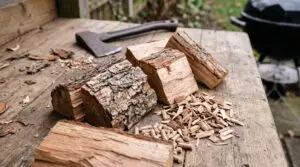
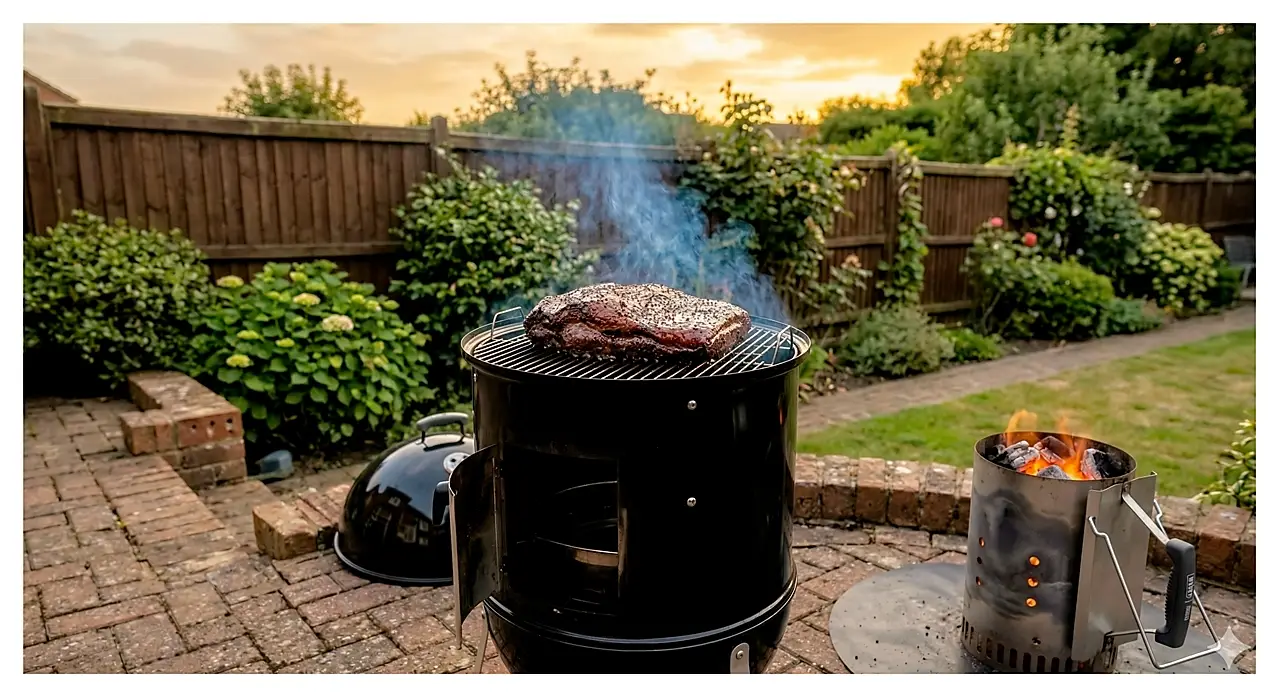
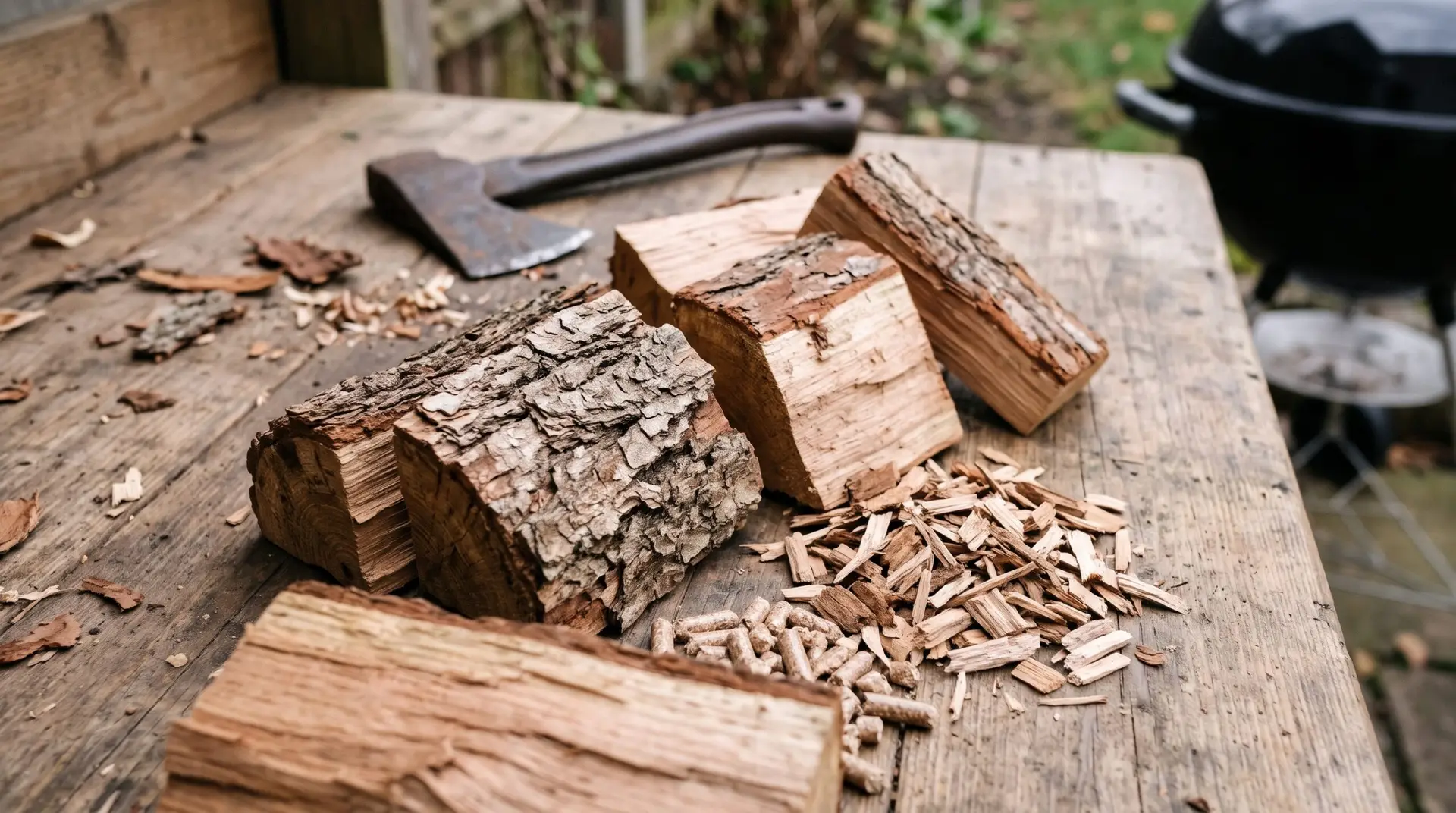
- Wood Chunks (Fist-Sized Blocks): Best for charcoal kettle BBQs, kamados, and bullet smokers like the Weber Smokey Mountain. Just 2 or 3 fist-sized chunks nestled onto lit charcoal briquettes will smoulder steadily for 3 to 4 hours.
- Wood Chips (Shredded Flakes): Designed for narrow loading trays in vertical electric cabinets like the Masterbuilt 710 WiFi Electric Smoker or for wrapping inside a DIY foil smoker pouch on a gas BBQ. Thrown loose onto open charcoal, chips flare up and burn out in 15 minutes.
- Food-Grade Hardwood Pellets: Compressed 100% hardwood sawdust pellets made specifically for pellet grills and outdoor electric smokers like the Ninja Woodfire Pro Connect XL. Never use domestic heating boiler pellets—they contain softwood glues and industrial binders.
Rule #1 in Smoking Wood for Beginners: Never Soak Your Wood!
Walk into any supermarket in summer and the back of a wood chip bag will tell you to soak the chips in water for 30 minutes before cooking. Ignore this advice completely.
Hardwood is dense and hydrophobic; soaking wood for an hour barely penetrates the outer millimetre of timber. When you throw wet wood onto hot coals, the water simply cools your fire down and boils off as dirty white steam at 100°C before the wood can reach the 300°C+ combustion zone needed for clean thin blue smoke. Keep your wood dry, control your oxygen vents instead, and let dry timber smoulder cleanly.
Seasoned vs Kiln-Dried vs Green Wood: The 15–20% Sweet Spot
In Smoking Wood for Beginners, moisture content dictates how clean your smoke tastes:
- Green Wood (Freshly Felled — 40%+ Moisture): Never smoke with freshly cut garden branches. High sap and water content create thick, choking white smoke and sour meat.
- Seasoned or Kiln-Dried Wood (15% to 20% Moisture): This is the pitmaster gold standard. It ignites cleanly, produces translucent blue smoke, and releases sweet aromatic lignin compounds.
- Bone-Dry Barn Timber (Under 8% Moisture): Over-dried timber burns up too fast like kindling, giving you heat spikes with very little smoke flavour.
Essential UK Wood Smoking Tools & Guides
Now that you have the fundamentals of Smoking Wood for Beginners dialled in, pair your timber selection with our interactive UK smoking calculators and temperature guides:
- Interactive flavour matcher: Use our Wood Pairing Chart (UK Woods) to match every meat cut to the right British hardwood.
- Master clean fire management: Read Thin Blue Smoke vs White Billow: How to Get Clean Smoke Every Time so your smoker never produces bitter white smoke.
- Calculate exact cooking times: Plug your meat weight into our BBQ Smoker Time Calculator or visit the All UK BBQ Calculators & Pitmaster Hub.
- Verify food-safe doneness: Always pull your meat at the right internal target using our Safe Internal Food Temps (°C) UK Guide.
What is the best smoking wood for beginners in the UK?
British oak and applewood are the best smoking woods for beginners in the UK. Oak delivers a classic, balanced savoury smoke that works on beef brisket, ribs, and lamb without turning bitter, while applewood offers a mild, sweet fruitwood smoke ideal for pulled pork, ribs, and chicken.
Should you soak wood chips or wood chunks before smoking?
No, you should never soak wood chunks or wood chips in water before smoking. Wet wood cools down your charcoal bed and creates dirty white steam rather than clean, aromatic thin blue smoke.
What woods should you never use in a BBQ smoker?
Never burn softwoods or evergreen conifers such as pine, fir, spruce, cedar, or cypress, as their resinous sap creates toxic black soot and bitter creosote. You must also avoid pressure-treated fencing, pallet wood, plywood, MDF, or painted timber.